













Trading 212 is a UK investment platform offering share dealing, tax-advantaged accounts, retirement investing, cash savings and leveraged CFD trading through web and mobile interfaces. UK customers contract with Trading 212 UK Ltd, an FCA-authorised company. The platform is designed around low headline dealing costs, fractional shares and automated portfolio tools, but taxes, foreign-exchange charges, market spreads and product-specific risks still matter.
This analysis focuses only on the United Kingdom. Trading 212 operates through several legal companies, so a feature available to a UK resident may differ from one offered elsewhere. Rates, promotional terms and the percentage of CFD accounts recording losses can also change. The account screen and current legal documents remain the controlling sources before any application or transaction.
Trading 212 UK at a glance
The platform brings several account types into one interface. That convenience should not blur the difference between investing, saving and leveraged speculation.
| Item | Verified UK information |
|---|---|
| UK operator | Trading 212 UK Ltd |
| Regulator | Financial Conduct Authority |
| Firm reference number | 609146 |
| Main account types | Invest, Stocks & Shares ISA, Cash ISA, SIPP and CFD |
| Primary UK currency | Pound sterling; Invest also supports multiple currency balances |
| Trading commission | Free for Invest, ISA and SIPP accounts |
| Custody fee | Free for Invest, ISA and SIPP accounts |
| FX fee | 0.15% when Trading 212 converts currency in Invest, ISA or SIPP |
| Cash ISA minimum | £1 |
| Platforms | Web, iOS and Android |
| Support | 24/7 through the platform and Help Centre |
Account types for UK customers
Trading 212 uses separate account wrappers for different financial goals. Moving between them in one app is convenient, yet their tax treatment, asset eligibility and withdrawal rules are not interchangeable.
Invest account
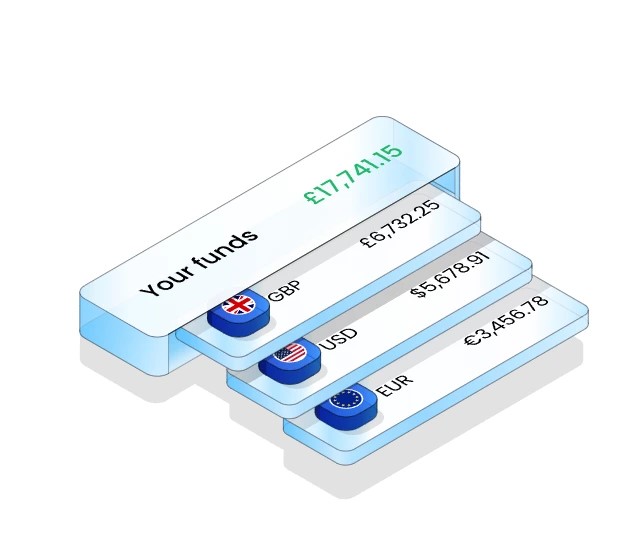
The general Invest account provides access to shares, exchange-traded funds, exchange-traded products, commodities, REITs and investment trusts available through supported exchanges. It is a multi-currency account, allowing a customer to hold balances such as GBP, USD and EUR and choose a settlement currency for eligible orders. A direct currency conversion still carries the published 0.15% FX fee.
Fractional shares lower the entry amount for expensive stocks, while Pies group holdings by target percentage. AutoInvest can fund a Pie on a schedule, and dividend reinvestment can allocate received cash after the relevant threshold is reached. These tools automate instructions; they do not select a suitable portfolio or protect it from falling markets.
Stocks and Shares ISA
The Stocks and Shares ISA holds eligible shares and ETFs within the UK tax wrapper. For the 2026/27 tax year, a UK adult can contribute up to £20,000 across all ISAs. Income and gains inside the wrapper are generally sheltered from UK tax, though tax treatment depends on personal circumstances and ISA rules can change.
Trading 212 describes its ISA as flexible. Money withdrawn can normally be replaced within the same tax year without using the allowance again, provided the replacement follows the applicable flexible-ISA rules. Instrument eligibility is narrower than in a general Invest account because HMRC requirements apply. An asset can lose ISA eligibility following a delisting or move to an exchange that HMRC does not recognise.
Cash ISA
The Cash ISA is an instant-access savings account with a £1 opening minimum. Interest accrues daily and is paid monthly on the third calendar day. The core rate tracks the Bank of England base rate minus Trading 212's current margin of 0.15 percentage points. Because the rate is variable, a figure visible today should not be treated as fixed for a future period.
At the time of verification, a dedicated Trading 212 promotion page advertised 4.55% AER, including an additional 0.95 percentage points for the first 12 months on qualifying current-tax-year contributions. Eligibility was limited to qualifying new UK customers opening through the correct promotional link or code and meeting the funding deadline in the current terms. This is not a universal account-opening payment, and transferred money from earlier tax years may receive only the core rate.
SIPP
The Self-Invested Personal Pension is intended for retirement saving. Eligible customers must generally be UK residents, aged at least 18 and under 75, and able to provide a National Insurance number. For many people, the annual allowance is £60,000 including tax relief, subject to earnings, tapering and carry-forward rules. Trading 212 claims basic-rate relief from HMRC, which usually reaches the account six to eleven weeks after a personal contribution.
Pension funds normally cannot be accessed until age 55, rising to 57 from 2028, except where a permitted exception applies. Tax rules and future access ages can change, so the SIPP should not be treated as an ordinary trading wallet.
CFD account
CFDs provide leveraged exposure to price movements without ownership of the underlying asset. Markets can include shares, foreign exchange, ETFs, indices and commodities. Crypto CFDs are not offered to UK retail customers. Charges can include the spread and overnight interest, with exact figures displayed for each instrument.
The risk is materially higher than in an unleveraged Invest account. Trading 212's current warning states that 77% of retail investor accounts lose money when trading CFDs with this provider. Leverage can accelerate losses, positions may close after a margin shortfall, and holding costs can build over time. A practice account can explain order controls but cannot reproduce the emotional or liquidity effects of committing real funds.
Markets, shares and portfolio tools
Trading 212 provides access to securities listed across exchanges including the London Stock Exchange, NYSE, NASDAQ, Xetra and several European markets. Availability depends on the account wrapper and the status of each instrument.
| Feature | How it works | Limitation to check |
|---|---|---|
| Fractional shares | Buy an eligible stock by value rather than a whole-share quantity | Not every security supports fractions |
| Pies | Group holdings by target weights | Allocation is chosen by the customer or copied from a public model |
| AutoInvest | Schedules contributions and allocation to a Pie | Payment fees and FX conversion can still apply |
| Dividend reinvestment | Reinvests Pie dividends after the calculated threshold | Small cash amounts may wait below the threshold |
| Extended US sessions | Eligible US shares may trade outside the regular session | Lower liquidity and wider spreads can affect execution |
| Portfolio transfer | Moves supported securities between brokers | Timing depends on both firms and some holdings may be unsupported |
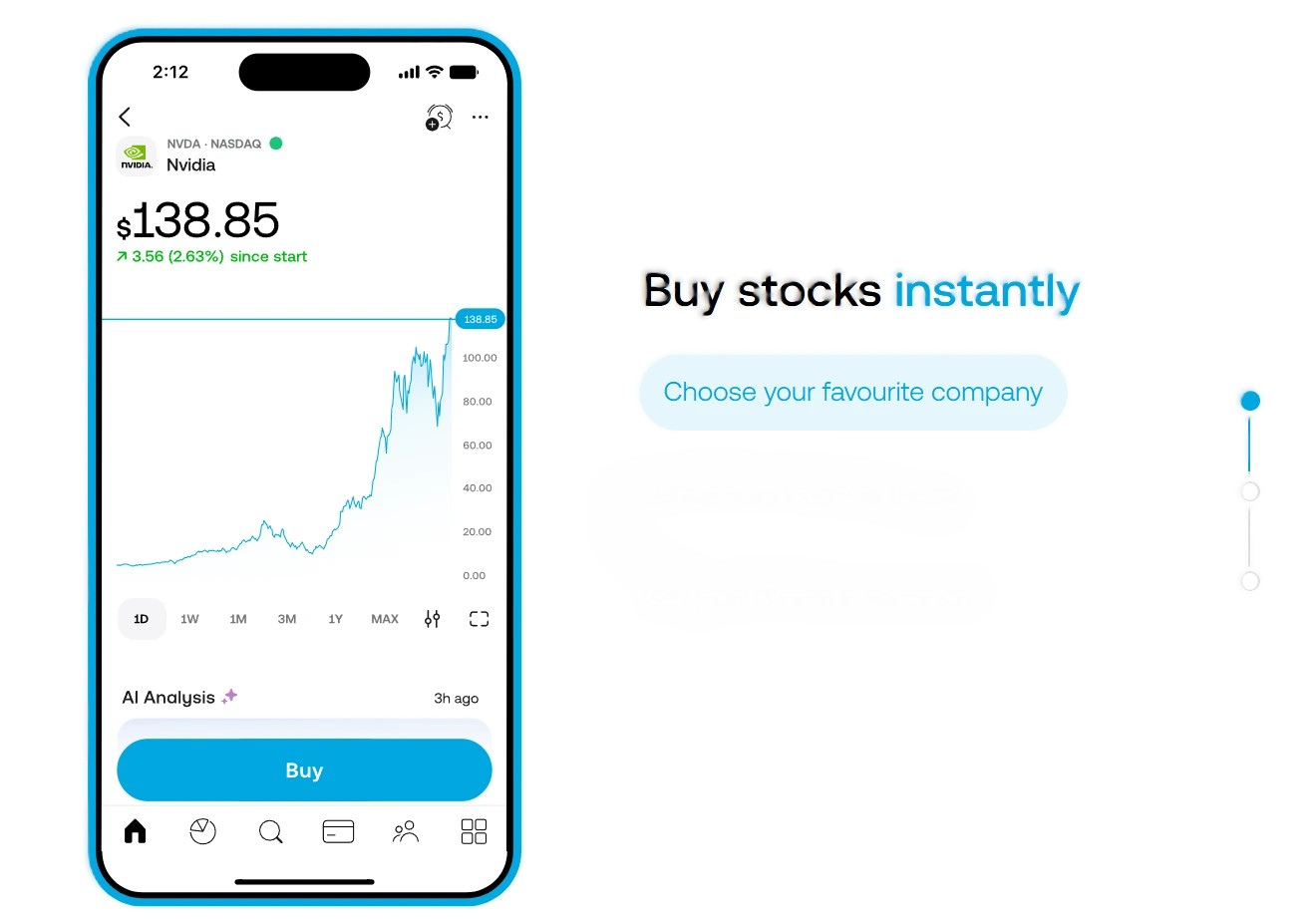
The Invest and ISA charts use last-trade prices supplied by outside market-data sources. That chart value is not necessarily the price at which an order will execute. CFD charts instead display buy and sell prices linked to the product. Order type, available liquidity, market hours and volatility all influence execution.
Fees and costs
The phrase commission-free investing refers to Trading 212's dealing commission, not to a complete absence of costs. For Invest, ISA and SIPP accounts, the broker lists free commission and custody alongside a 0.15% FX fee. External taxes and exchange charges may still apply.
| Cost | Published amount | When it applies |
|---|---|---|
| Trading commission | £0 | Invest, Stocks ISA and SIPP dealing |
| Custody | £0 | Invest, ISA and SIPP holdings |
| Foreign exchange | 0.15% | Currency conversions made by Trading 212 |
| UK Stamp Duty Reserve Tax | Usually 0.5% | Qualifying purchases of London-listed shares |
| PTM levy | £1.50 per trade | Qualifying UK purchases or sales above £10,000 |
| Card or mobile-wallet funding | Free up to a cumulative £2,000, then 0.7% | Applicable supported deposits to Invest or ISA accounts |
| Bank and instant bank transfer | Free from Trading 212 | The sending bank may impose its own charge |
| Withdrawals | Free from Trading 212 | Bank or payment-provider timing still applies |
CFD pricing follows a different model. The spread is built into the difference between buy and sell prices, and overnight financing can apply to positions kept open. The order screen and instrument details should be checked before submission rather than relying on a platform-wide fee summary.
Deposits and withdrawals
UK customers can use standard bank transfer, instant bank transfer, supported debit cards, Apple Pay and Google Pay where their account type permits. Credit cards, American Express and PayPal are not accepted for Trading 212 UK Ltd customers. Cash ISA funding is restricted to bank transfer and instant bank transfer.
Payments must come from an account held in the customer's name. Business accounts and third-party funding are rejected. A joint bank account may require a PDF statement showing both account holders.
Making a GBP deposit
- Open the app or web platform and choose the correct account.
- Select Deposit funds and review the methods available for that account.
- Choose bank transfer, instant bank transfer or another supported route.
- Enter the GBP amount and check any displayed funding fee.
- Authorise the transaction through the bank or payment provider.
- Confirm that the money appears in the intended account before investing.
Instant Bank Transfer uses Open Banking and is normally credited within minutes when initiated inside Trading 212. A standard transfer often takes one to three business days. Bank checks or technical problems can extend either timeframe.
Requesting a withdrawal
- Sell investments if cash is not already available and wait for settlement.
- Open Manage Funds and choose Withdraw funds.
- Select a verified method owned by the account holder.
- Enter the amount and complete any requested security check.
- Track the request through Pending, Under Review, Processing and Executed statuses.
Settlement after closing a position usually takes one or two business days. Once a withdrawal is marked Executed, Faster Payments may arrive quickly, while some bank, SWIFT or card routes can require up to three business days. Compliance checks or unsupported payout methods can add delay.
Registration and identity verification
UK onboarding is completed through the website or mobile app. Applicants must be at least 18, reside in a supported country and pass identity and regulatory checks. ISA and SIPP eligibility adds UK residence or tax-residence requirements.
- Choose Open account and register with email, Apple ID or Google.
- Create a Trading 212 password and confirm the requested contact details.
- Enter full name, date of birth, residential address and nationality.
- Select tax residence and provide the National Insurance number or relevant tax identifier.
- Answer questions about financial circumstances, experience and intended account use.
- Upload a passport, identity card, driving licence or residence permit.
- Complete the motion-selfie check on a mobile device.
- Provide recent proof of address if requested and wait for activation.
UK proof-of-address records may include a bank statement, utility bill, council-tax letter or eligible government correspondence. Current UK requirements generally call for a document no older than three months, though certain document types carry their own accepted period. Further information or source-of-funds evidence can be requested.
FCA regulation and asset protection
Trading 212 UK Ltd is registered in England and Wales and authorised by the Financial Conduct Authority under firm reference number 609146. Current Invest terms list its address as Aldermary House, 10-15 Queen Street, London, EC4N 1TX. FCA status places the company within UK conduct, client-money and reporting rules; it does not guarantee investment performance.
Client money is kept apart from the firm's own money under segregation arrangements. Where eligible cash is held with a bank, Trading 212 states that FSCS deposit protection can apply up to £120,000 per partner bank, taking account of other money the customer holds with that bank. Money placed in a qualifying money market fund is treated as an investment and does not receive bank-deposit protection.
Compensation coverage depends on why a loss occurred and on the product or institution involved. FSCS protection does not cover a fall in a stock, ETF, fund or CFD caused by normal market movement. Customers should check where uninvested cash is held and which protection route applies rather than assuming every balance has the same status.
Security and account controls
Mandatory two-factor authentication uses a trusted device or an authenticator app. A new trusted device may require a motion selfie. The mobile app can also use a six-digit passcode and supported biometric authentication. Customers can inspect trusted devices and remove access they do not recognise.
- Use a unique password and keep backup authentication codes offline.
- Open the platform only through the official domain or verified app-store listing.
- Confirm payment details inside the account instead of following emailed bank instructions.
- Check orders, contract notes and statements for unexpected activity.
- Contact support immediately after an unknown login or withdrawal notification.
Trading 212 mobile app and web platform
Trading 212 provides native applications for iOS and Android alongside its browser platform. The app supports onboarding, trading, account switching, deposits, withdrawals, Pies, portfolio monitoring and security controls. Apple or Google sign-in can be linked, but a Trading 212 password is still created during onboarding.
The web interface covers core account and order functions, while mobile is required for the identity-document and motion-selfie stage. Market charts, watchlists, alerts and account reports are available across supported devices. A stable connection remains important when prices are moving quickly, and extended-hours orders can face thinner liquidity than regular-session trading.
Customer support
The official site advertises 24/7 support and displays a current average response time, though this is a live service metric rather than a guaranteed resolution deadline. Customers can search the Help Centre or contact the team through the platform. Complex complaints, transfers, tax records or verification cases may require written documents and several exchanges.
Critical assessment
Trading 212's main strengths for UK customers are low published dealing charges, fractional investing, multiple account wrappers and automation through Pies. The Cash ISA and SIPP broaden the platform beyond ordinary share dealing. The main limitations are equally clear: tax and exchange costs still apply, promotions are conditional, multi-currency support is strongest in Invest rather than ISA, and CFD losses affect a majority of retail accounts.
The platform can be suitable for self-directed customers who understand asset selection, diversification and order execution. It is not personal financial advice, and interface simplicity should not be confused with low investment risk. Account choice should begin with tax status, time horizon, access needs and capacity for loss.
FAQ
Is Trading 212 regulated in the UK?
Does Trading 212 charge commission?
What is the minimum for a Trading 212 Cash ISA?
How long does a Trading 212 withdrawal take?
Can UK customers trade cryptocurrency CFDs?